










As a passionate baker, understanding the nuances of ingredients can significantly elevate your baking game. One common hurdle is the conversion of fresh yeast to dry yeast. This conversion is crucial, especially when recipes specify one type and you only have the other. Let’s delve into the specifics, ensuring you achieve perfect bakes every time.
- Why Convert Fresh Yeast to Dry Yeast?
- How to Properly Convert Yeast
- Differences Between Fresh and Dry Yeast
- Common Mistakes in Yeast Conversion
- Pros and Cons of Using Dry Yeast
- How Environment Affects Yeast Performance
- Exploring Yeast Alternatives
- Frequently Asked Questions
- Getting Started with Yeast Conversion
Why Convert Fresh Yeast to Dry Yeast?
Converting fresh yeast to dry yeast is often necessary due to availability and shelf life. Fresh yeast has a short shelf life, typically lasting only 2-3 weeks in the refrigerator. In contrast, dry yeast can last up to 2 years when stored properly.
Moreover, dry yeast is more commonly available in supermarkets, making it a convenient choice for home bakers. According to the International Baking Industry Exposition, over 70% of home bakers prefer dry yeast for its reliability and ease of use.
How to Properly Convert Yeast
To convert fresh yeast to dry yeast, you can use a simple conversion ratio. For every 1 ounce of fresh yeast, use 0.33 ounces of active dry yeast or 0.25 ounces of instant yeast. This means if your recipe calls for 1 cube of fresh yeast (usually 0.6 ounces), you should use about 2 teaspoons of active dry yeast.
| Fresh Yeast | Active Dry Yeast | Instant Yeast |
|---|---|---|
| 1 ounce | 0.33 ounces | 0.25 ounces |
| 0.6 ounces (1 cube) | 2 teaspoons | 1.5 teaspoons |
Always remember to proof active dry yeast before use by dissolving it in warm water (105-110°F) to activate the yeast cells.
Differences Between Fresh and Dry Yeast
Fresh yeast, also known as cake yeast, contains about 70% moisture and provides a subtle, rich flavor to baked goods. It’s often favored by professional bakers for artisanal bread due to its ability to produce a strong rise and better flavor profiles.
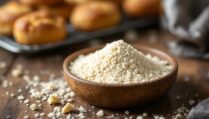
Dry yeast, on the other hand, is available in two forms: active dry and instant. Active dry yeast needs to be dissolved in water before use, while instant yeast can be mixed directly into dry ingredients. Dry yeast is more stable and has a longer shelf life, making it ideal for home bakers.
Common Mistakes in Yeast Conversion
One common mistake is not adjusting the liquid content in the recipe when converting yeasts. Fresh yeast adds moisture, so when substituting, reduce the liquid slightly if your dough feels too wet. Another error is using too much dry yeast, which can lead to over-fermentation and off flavors.
Additionally, failing to proof active dry yeast can result in poor rising. Always ensure your yeast is active by proofing it in warm water before adding it to your dough.
Pros and Cons of Using Dry Yeast
- Pros:
- Long shelf life
- Easy to store and transport
- Reliable performance
- More readily available
- Cons:
- Requires proofing (for active dry)
- Less flavor complexity compared to fresh yeast
- Conversion needed for some recipes
How Environment Affects Yeast Performance
Yeast performance can be highly influenced by environmental factors such as temperature and humidity. Yeast prefers a warm and humid environment. Optimal fermentation occurs at temperatures between 75°F and 85°F. Lower temperatures can slow down fermentation, while higher temperatures can kill the yeast cells.
Humidity also plays a role; in dry conditions, dough may need additional moisture to prevent drying out. Consider the climate of your kitchen when preparing dough, as it can significantly impact the yeast’s activity and the final bake.
Exploring Yeast Alternatives
In cases where yeast isn’t available, or for those seeking a different flavor profile, alternatives like sourdough starter and baking powder can be considered. Sourdough starter is a natural leavening agent made from flour and water, allowing wild yeast and bacteria to ferment.
Baking powder can be used as a leavening substitute in quick breads and cakes but doesn’t provide the same depth of flavor or texture as yeast. Understanding these alternatives can expand your baking repertoire and offer flexibility in your recipes.
Frequently Asked Questions
What is the shelf life of fresh yeast?
Fresh yeast typically lasts about 2-3 weeks when stored in the refrigerator.
How do I know if my yeast is still good?
Proof it by dissolving in warm water with a pinch of sugar. If it bubbles within 10 minutes, it’s active.
Can I use dry yeast in recipes calling for fresh yeast?
Yes, use the conversion ratio of 1 ounce fresh to 0.33 ounces active dry or 0.25 ounces instant yeast.
Is instant yeast better than active dry yeast?
Instant yeast is more convenient as it doesn’t require proofing, but both are effective.
Does fresh yeast offer better flavor?
Many bakers believe fresh yeast imparts a richer flavor, especially in bread.
What can I use if I’m out of yeast?
You can use sourdough starter or baking powder as alternatives, depending on the recipe.
Getting Started with Yeast Conversion
To begin converting fresh yeast to dry yeast, start by examining your recipe and determining the amount of fresh yeast required. Use the conversion table provided to calculate the equivalent dry yeast amount. Ensure you have all your ingredients ready, and remember to adjust your liquid content if necessary. With practice, converting yeast becomes a seamless part of your baking process, allowing you to use what’s on hand without compromising your recipe.
Incorporating yeast conversion into your baking routine not only enhances your versatility but also ensures you can tackle any recipe with confidence. Happy baking!