



{ “title”: “Cake Yeast vs Dry Yeast: Which Is Best for Your Baking?”, “body”: “
Cake Yeast vs Dry Yeast: Which Is Best for Your Baking?
By FoolProofBaking · 2026-06-03 · 6 min read
n
If you’ve ever found yourself standing in front of the baking aisle, confused about which yeast to choose, you’re not alone. The decision between cake yeast and dry yeast can significantly impact your baking results. Each type of yeast has its unique characteristics, strengths, and weaknesses. In this article, we’ll break down the differences, usage, and tips for both types, helping you make an informed choice for your next baking project.
nn
- n
- Understanding Yeast: An Overview n
- What is Cake Yeast? n
- What is Dry Yeast? n
- Key Differences Between Cake Yeast and Dry Yeast n
- When to Use Cake Yeast vs Dry Yeast n
- Tips for Baking with Yeast n
- Conclusion: Choosing the Right Yeast for Your Recipe n
nn
Understanding Yeast: An Overview
n
Yeast is a living organism that plays a crucial role in baking. It is a type of fungus that ferments sugars in dough, producing carbon dioxide and alcohol. This process not only helps in leavening baked goods but also adds depth to their flavors. There are various types of yeast available, but cake yeast and dry yeast are the most commonly used in home baking.
nn
What is Cake Yeast?
n
Cake yeast, also known as fresh yeast or compressed yeast, is a moist form of yeast that comes in a solid block. Typically found in the refrigerated section of grocery stores, it has a short shelf life of about two weeks. Cake yeast is approximately 70% moisture, making it very perishable but also highly active. Bakers often prefer it for its robust flavor and fast-acting properties, especially in recipes where flavor development is essential, like in rich doughs for brioche or bagels.
nn
How to use Cake Yeast
n
- n
- To use cake yeast, crumble it into warm water or milk (about 100°F-110°F) to activate it before adding it to your dry ingredients. n
- Since it’s less concentrated than dry yeast, you’ll need to use about three times more cake yeast than dry yeast for the same effect. n
nn
What is Dry Yeast?
n
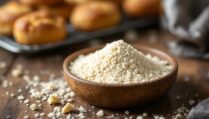
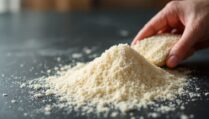
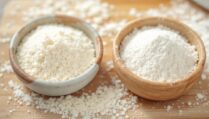
Dry yeast comes in two forms: active dry yeast and instant yeast. Active dry yeast has larger granules and requires proofing in warm water before use, while instant yeast has smaller granules and can be mixed directly with dry ingredients. Both types are shelf-stable and can last for a year or more if stored properly in a cool, dry place. Dry yeast typically has a longer shelf life than cake yeast, which makes it a popular choice for home bakers.
nn
How to use Dry Yeast
n
- n
- Active dry yeast needs to be proofed by dissolving it in warm water (about 105°F-110°F) before mixing into your recipe. n
- Instant yeast can be added directly to your flour mixture without proofing. n
nn
Key Differences Between Cake Yeast and Dry Yeast
n
| Feature | nCake Yeast | nDry Yeast | n
|---|---|---|
| Form | nSolid block | nGranules | n
| Moisture Content | n~70% | n~8-10% | n
| Activation | nRequires crumbling and dissolving in liquid | nActive dry needs proofing; instant can mix dry | n
| Shelf Life | n2 weeks refrigerated | n11 months to 2 years if stored properly | n
| Flavor | nRich, yeasty flavor | nNeutral flavor, less complex | n
When to Use Cake Yeast vs Dry Yeast
n
Choosing between cake yeast and dry yeast largely depends on your recipe and personal preference. Use cake yeast for recipes where flavor and texture are paramount, such as artisan breads or pastries. On the other hand, dry yeast is versatile and works well in most recipes, especially when convenience and accessibility are priorities.
nn
When to Choose Cake Yeast
n
- n
- For recipes requiring quick fermentation and a rich flavor, such as soft rolls, brioche, or pizza dough. n
- When you want to experiment with traditional baking methods, as many classic recipes call for cake yeast. n
nn
When to Choose Dry Yeast
n
- n
- For everyday baking where ease of use is crucial, such as in sandwich bread or quick pastries. n
- When baking in large quantities, as dry yeast is easier to store and handle. n
nn
Tips for Baking with Yeast
n
Regardless of the type of yeast you choose, there are some essential tips that can help ensure your baking success:
n
- n
- Measure accurately: Use a kitchen scale for precision. For example, one packet of dry yeast typically weighs around 2.25 teaspoons or 7 grams. n
- Temperature matters: The ideal temperature for activating yeast is 100°F-110°F. Too hot can kill the yeast, while too cold can slow down activation. n
- Give it time: Allow your dough to rise in a warm, draft-free area for the best results. A slow, longer rise often produces superior flavor. n
nn
Conclusion: Choosing the Right Yeast for Your Recipe
n
Choosing between cake yeast and dry yeast boils down to your recipe and personal preference. While cake yeast offers a rich flavor profile and is ideal for certain recipes, dry yeast provides convenience and versatility for everyday baking. Understanding the strengths and limitations of each type will empower you to make better decisions in the kitchen, resulting in delicious, baked creations every time.
nn”, “meta_title”: “Cake Yeast vs Dry Yeast: What’s Best for Baking?”, “meta_description”: “Discover the differences between cake yeast and dry yeast to improve your baking. Learn when to use each type for the best results.”, “internal_link_suggestions”: [“baking with yeast”, “how to proof yeast”, “best baking practices”], “faqs”: [n {“question”: “What is the main difference between cake yeast and dry yeast?”, “answer”: “The main difference lies in their form and moisture content: cake yeast is a solid block with about 70% moisture, while dry yeast consists of granules with about 8-10% moisture.”},n {“question”: “How do I use cake yeast in my recipes?”, “answer”: “To use cake yeast, crumble it into warm water or milk to activate it before adding it to your dry ingredients. Use about three times more cake yeast than dry yeast.”},n {“question”: “Can I substitute dry yeast for cake yeast?”, “answer”: “Yes, you can substitute. For every 1 ounce of cake yeast, use about 0.33 ounces (or 1 packet) of dry yeast.”},n {“question”: “How should I store dry yeast?”, “answer”: “Store dry yeast in a cool, dry place, and once opened, keep it in the refrigerator or freezer to extend its shelf life.”},n {“question”: “What types of recipes are best for cake yeast?”, “answer”: “Cake yeast is best for rich, flavorful recipes like brioche, pastries, and artisan breads.”}n] }